The Hidden Resource of Endurance: How Structural Integration Unlocks an Athlete’s Physical Potential
You train regularly, you love the mountains, and you value an active lifestyle. You invest in high-quality gear to feel confident on the trail. But have you ever wondered why movement sometimes feels more laborious than it should? What if the hidden brake on your agility and stamina is located within you—and it has nothing to do with muscle weakness or a lack of motivation?
According to sports medicine statistics, up to 70–80% of runners and outdoor enthusiasts encounter overuse-related discomfort every year. The culprit is often not a lack of strength, but a structural imbalance. For a long time, medicine ignored the fascia—the connective tissue permeating the entire body—viewing it merely as inert "packaging."
The biomechanical revolution of the last 20 years (validated by the Fascia Research Society congresses) has proven: fascia is a global, living network for the transmission of kinetic energy.
Structural Integration (SI) is an engineering-based approach to fine-tuning the human body. It is a method that transforms the body from a collection of disparate parts into a unified system that works in harmony with gravity, rather than against it.
What is Structural Integration and how does it differ from massage?
Many confuse SI with deep-tissue sports massage, but their objectives are fundamentally different.
Massage works with the "chemistry" of the tissue: its goal is to increase local blood flow, relax, and relieve tension in the "here and now."
Structural Integration works with the "geometry" and "physics" of the body.
Imagine wearing a high-tech trekking suit that is twisted to one side. No matter how hard you train, that misalignment will restrict your stride and create unnecessary friction. SI "unfurls" this suit (the fascial network), returning the body's segments (head, shoulders, pelvis, feet) to their natural axis.
Ida Rolf, biochemist and founder of the method, famously stated: "Gravity is the therapist." When the body is aligned vertically, gravity supports it. When the structure is compromised, gravity begins to "weigh down" on the lower back, knees, and joints. For an active individual, structural alignment means access to fluid, economical movement.
The Role of Fascia in Sports: Biomechanics and Statistics
Fascia is more than just a film. In any physical activity, it performs three critical functions. Ignoring them leads to the sensation of "heavy legs" and chronic micro-traumas.
1. Running and Hiking: The Katapult-Effekt (Catapult Mechanism)
Why can we walk or run for hours? The secret lies in Elastic Recoil.
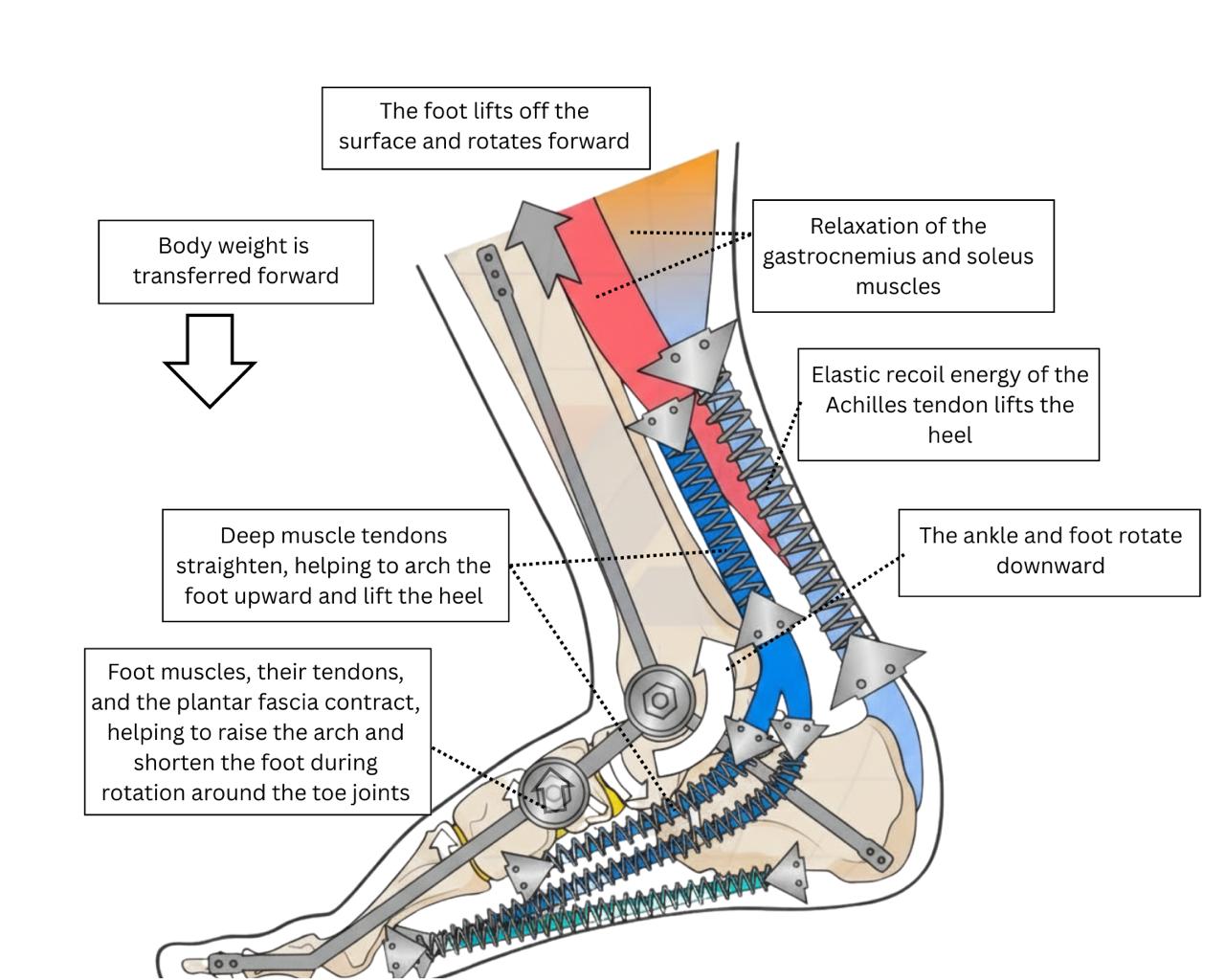
Research by Kawakami (2002) and Robert Schleip has shown that during walking and running, up to 50% of the energy is generated not by muscular effort, but by the passive recoil of fascial elements (especially the Achilles tendon and plantar fascia).
The Problem: Under stress, sedentary work, or old injuries, fascia loses its elasticity and becomes rigid. You stop "springing" and start dragging your body weight solely with your muscles. This drastically increases fatigue.
The SI Solution: Working with the feet and the superficial back line restores natural bounciness. Climbing becomes easier not because you’ve become stronger, but because your body has started to assist you.
2. Skiing and Ski Touring: Control and Safety
Alpine skiing and freeriding place colossal loads on the joints. During a turn, forces several times the athlete's body weight act upon them.
Biotensegrity: Your knee isn't held together just by ligaments. It "floats" within a tension network created by the thigh fasciae. If this network is unevenly tensioned (e.g., due to a pelvic tilt), the load is distributed incorrectly, causing joint pain.
Note: Tensegrity = Tension + Integrity. Like a tent, if the guidelines are pulled unevenly, the structure loses its function.

The SI Effect: Balancing the tension of the inner and outer lines of the legs allows for even pressure distribution, protecting menisci and ligaments. You feel the ski more precisely and fatigue less.
3. Neuroplasticity: Body Awareness
Fascia is our primary sensory organ. It contains 6 to 10 times more receptors than muscle tissue.
Fact: Manual work on the fascia improves proprioception—your sense of your body in space. For a trail runner or climber, this is critical: you react faster and more accurately to unstable rocks or roots, reducing the risk of a sprained ankle by 20–30%.
The Science of Recovery: Why does the body feel "stiff"?
Familiar with that feeling of stiffness in the morning or after a long trek? It’s not always the muscles. Often, it is a process of densification.
According to the work of Carla Stecco, a "lubricant" called hyaluronic acid resides between the layers of deep fascia.
Normally: It is fluid, allowing muscles to glide freely against one another.
When Compromised: Due to overuse, cold, or static tension, the lubricant thickens, turning into "glue." Tissues stick together, creating friction and loss of mobility.
Structural Integration utilizes specific, slow, angled pressure. This creates a thixotropic effect: under the heat and pressure of the specialist's hands, the viscous "glue" becomes a fluid lubricant again.
Result: Free sliding of tissues is restored. Nutrients reach the muscles faster, and you experience that "lightness in the body" that makes sports enjoyable.
Real Results: A Practical Case Study
Typical Scenario: A cycling enthusiast complains of chronic lower back pain after long rides. MRIs are clear; core strengthening doesn't help.
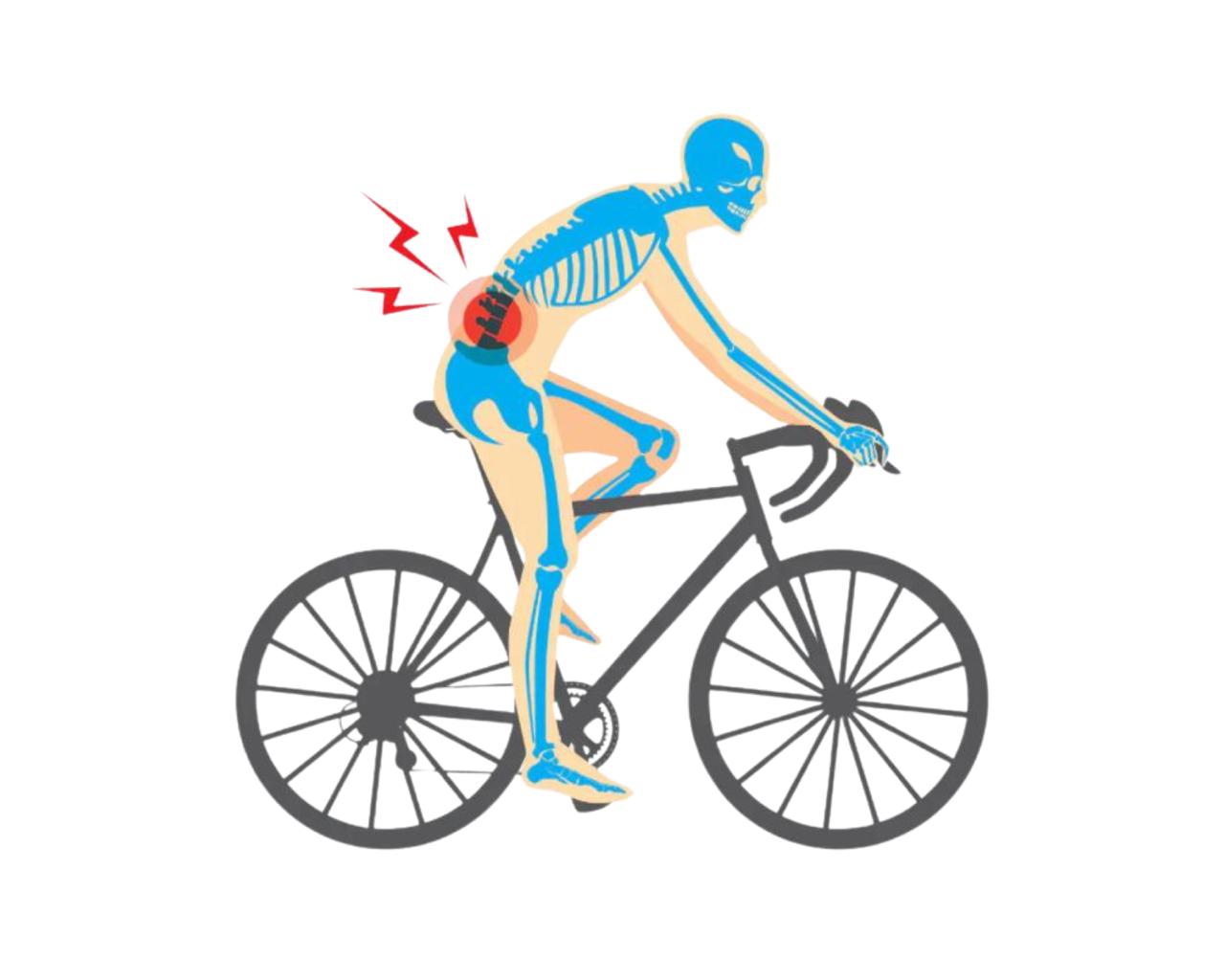
The Structural Integrator’s Perspective: The problem isn't the back. Testing reveals a shortening of the Front Line (abdomen, rib cage, quadriceps)—a common result of desk work or the cycling posture itself. This line pulls the body forward, forcing the back muscles to overwork just to keep the person upright.
Solution: Instead of massaging the back (where it hurts), the specialist works on the abdomen and thighs (where it pulls).
Outcome: After a series of sessions, the front of the body lengthens. The back relaxes automatically as the constant "tug-of-war" ends. Breathing becomes easier, and pedaling becomes more efficient.
Frequently Asked Questions (FAQ)
How long do results last? Unlike a classic massage, which often provides temporary relief, SI changes movement patterns and posture. Improvements persist for months and years because the way you stand and move in daily life is fundamentally altered.
Is it painful? Sensations can be intense, but it is often described as "good pain"—a feeling of deep release. You are always in control of the process alongside the specialist.
How many sessions are needed? For a noticeable result in a specific area (e.g., shoulder mobility for climbing), a 3–5 session module is often enough. For a full-body realignment, the classic 10-session series is recommended.
Conclusion: An Investment in Reliability
In the outdoor world, we know that the reliability of our gear is more important than its appearance. Your body is your primary piece of equipment.
Structural Integration helps you calibrate it so that it serves you long and reliably. Don’t let accumulated tension limit your plans. Make your body your greatest ally in the mountains.
Want to learn how to optimize your biomechanics?
Book a free diagnostic consultation with Structural Integration specialist Tatsiana Harelava
